Trencadís is one of the best-known construction techniques of Catalan modernisme. In this article, we explain what it consists of, give examples of buildings that use it and indicate where to buy the material.
What is the trencadís technique?
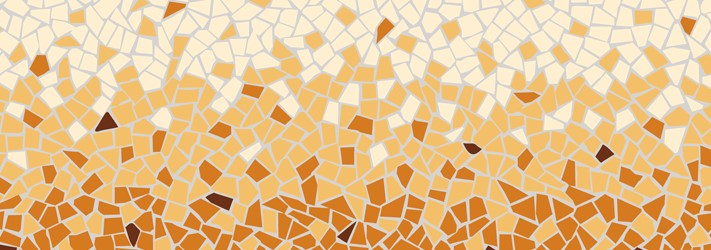
The concept of trencadís is a translation from Catalan. The most accurate translation in Catalan would be «trencadís», and it refers to a type of encaustic cement tiles which is made with sections of stones that have been cemented. The result is a floor, a wall, a façade or a sculpture with a different and characteristic effect.
This construction technique was mainly used for ornamental purposes and forms part of Catalan Art Nouveau architecture. However, it should also be noted that in the Valencian Community it is possible to find several buildings with this technique.
Buildings where to find trencadís
The trencadís is an invention of the great architect Antoni Gaudí, although it is true that it had already been experimented with before.
It was first used between 1883 and 1887. It is important to point out that it has subsequently been adopted by other architects and in other territories. Therefore, today there are civil, religious and other buildings, not only modernist, that include it.
In any case, there is agreement that it is an eminently Mediterranean technique. The main chronological difference is that in the early days, disposable water-based ceramic waste was used, such as, for example, fragments of plates. Today, however, this technique is much more refined and new technologies are used to achieve more attractive visual effects.
- Güell Estate
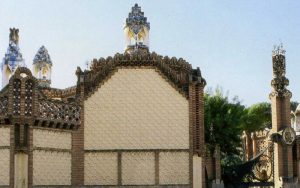
The Güell estate and park, located in the Pedralbes district of Barcelona, was one of Gaudí's first works. The pavilions were built between 1883 and 1887. This technique can be seen in the pavilion's tower temples in clear light. It was the first time that this philosophy was undertaken with a certain stylistic coherence.
- La Pedrera
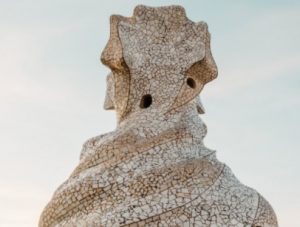
This is one of Gaudí's most famous buildings, although it was not without controversy. The name Pedrera was, in its beginnings, a nickname, and it was built between 1906 and 1912. Traccadís was used for the towers of this house, located in Barcelona's Eixample district.
Today they are preserved in perfect condition and crown the building. We see, therefore, that there is a chronological coherence in Gaudí's use of this technique in different buildings and periods.
- Parc Güell
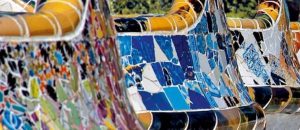
Parc Güell is one of Barcelona's main tourist attractions, although it was originally designed as a housing estate, built between 1900 and 1914. The iconic drac is clad in mosaic, as is the hypostyle hall and the benches that provide a view of the city. It is probably one of Gaudí's works in which this construction element is most frequently found.
- Ciutat de les Arts i les Ciències de València (Arts and Sciences City of Valencia)
Santiago Calatrava is the architect of today who has done most to introduce the concept of the trencadís in the works.
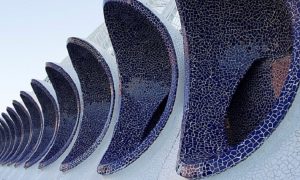
Although it has its own concept, in many aspects it is inspired by the architect A. Gaudí and other modernist architects. Thus, the monumental building of the City of Arts and Sciences of Valencia has several elements of this type.
- Auditori Adán Martín de Tenerife
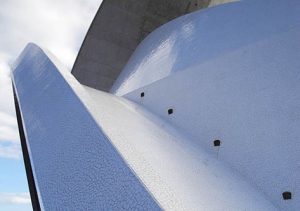
The Adán Martín Auditorium in Tenerife is another of Santiago Calatrava's masterpieces. It was built between 1997 and 2003 and we can see fragments of it on the exterior façade. Its location and presence are exponents of a clear post-modern concept. The idea is to give a lively image to the building, something that can be achieved thanks to the white sections of the trencadís. This is one of the examples of postmodernist architecture.
Mosaics Torra as a supplier of hydraulic mosaics
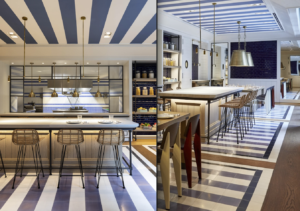
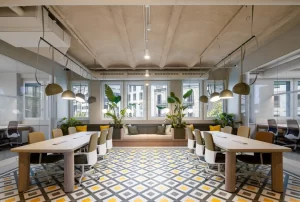
At Mosaics Torra we manufacture all types of hydraulic tiles and mosaics, inspired by the works of Antoni Gaudí. For example, the trencadís hydraulic mosaic is inspired by this philosophy. The difference is that, if you wish, you can put it inside your house.
Our good work as manufacturers, marketers and restorers of public buildings precedes us. In the 1990s, the manufacture of hydraulic gratings became fashionable again, so that modernist construction techniques were revalued. We have been and still are a reference in the sector, having contributed to the restoration of Park Güell, among other actions. We have public and private clients.
For all these reasons, if you are looking for a reliable supplier of tiles and hydraulic mosaic, we encourage you to contact us. You will find what you are looking for and you will be able to give a new touch to your stay.