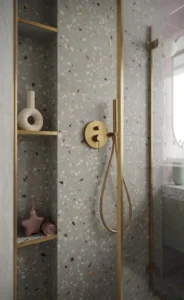
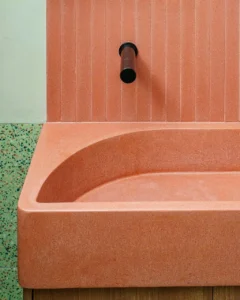
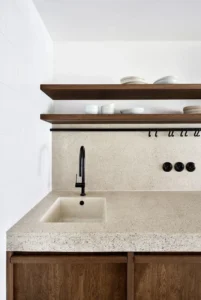
Today the kitchen is one of the central rooms of the home, and the floor and walls do most to define it. Cement tiles, made by hand from pigmented cement, are returning to kitchens for their pattern, their colour and how well they stand up to daily use.
We look at the 2026 trends for kitchens with cement tiles and how to carry them through on site, for interior designers, architects and homeowners.
1. Why cement tiles are now trendy
A cement tile is a piece of pigmented cement, cold-pressed in a metal mould and cured for at least 28 days. The pattern is part of the tile itself. In the kitchen, that means:
- Full customisation of pattern and colour.
- Durability and wear resistance.
- Aesthetic presence that generates identity in key spaces such as the kitchen.
It is what people now ask of a kitchen: materials with history, texture and authenticity.
2. Design trends that will make a mark in 2026
A. Pattern integration with visual balance
In 2026, there will be a preference for patterns with identity without saturating space. This translates into:
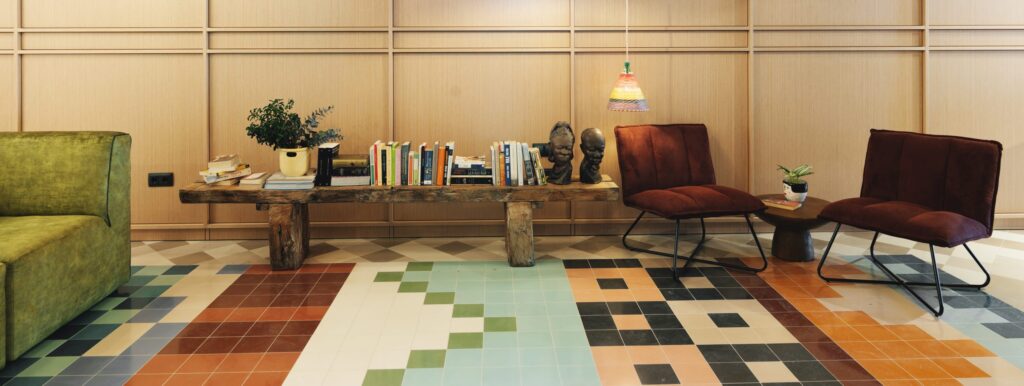
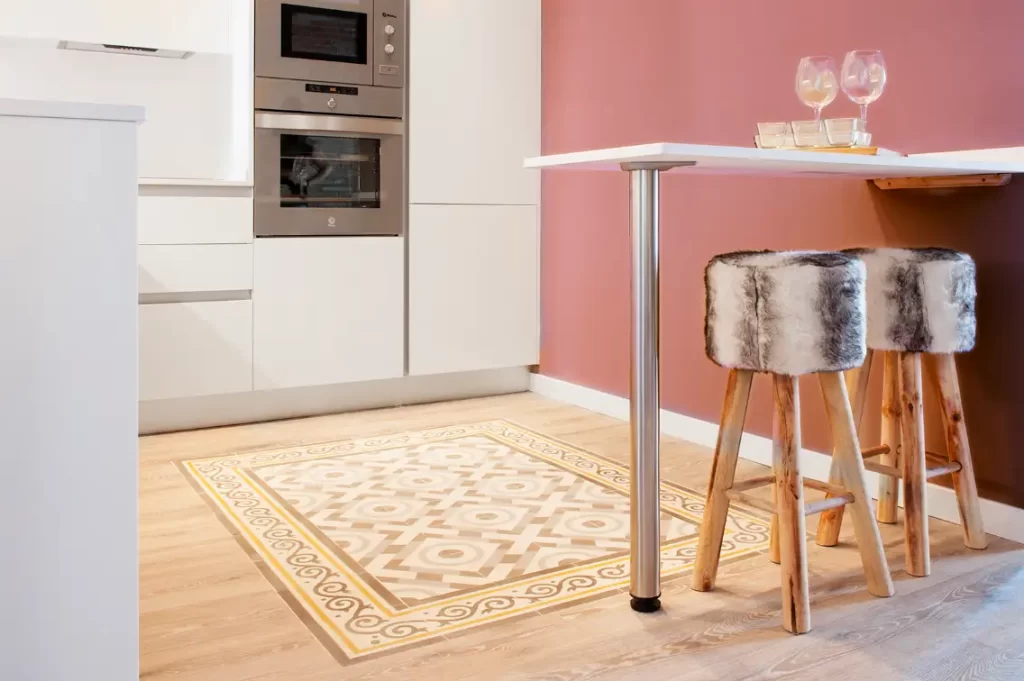
- “Tile rugs: defined areas of pattern around the kitchen island or informal dining areas, creating areas of character without visually overloading.
- Pattern borders and frames: use a framed pattern to separate functional areas (e.g. under the island or in front of the hood).
- Pattern splicing: combining patterned cement tiles with plain-colour tiles to balance presence and visual calm.
This trend responds to an aesthetic very thoughtful, narrative and adaptable, avoiding excessive patterns without context.
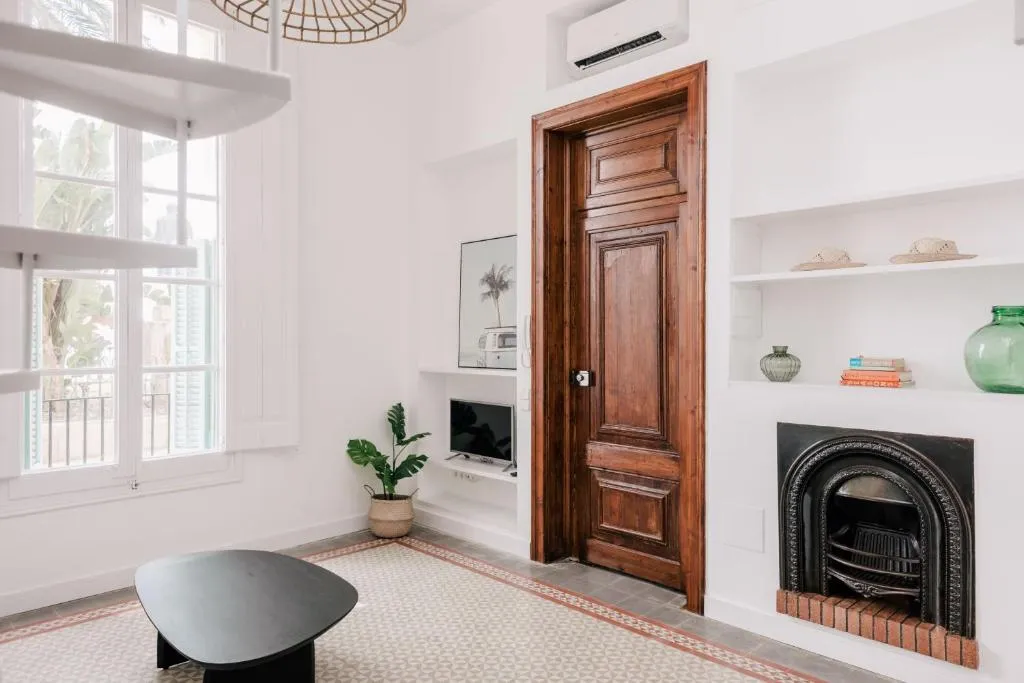
B. Cement tiles and terrazzo, the same cement
Interior designers are pairing cement tiles with other concrete pieces:
- Terrazzo for worktops and bar counters, in the same colour as the floor.
- Plain-colour tiles across larger areas, so the pattern sits at the heart of the kitchen.
- A natural finish on floor and walls and a polished finish on the terrazzo worktop, with factory sealing on every piece.
That way the cement tiles can take the lead or act as an accent, depending on the scale of the project.
C. Colour palettes that connect tradition and modernity
The strongest palettes combine:
- Earth tones and warm neutrals: beige, sand, terracotta and soft greys.
- Details in deep colours: navy blue, petrol green, mustard or caramel for points of interest.
- Subtle tone-on-tone contrasts, which avoid cluttering the room in small kitchens.
These chromatic directions work both on floors and backsplashes, bringing visual unity and sense of continuity.
3. Practical applications in kitchens
A. Floors that organise the kitchen
In open-plan kitchens, cement tiles define areas and mark the way through. They work especially well as:
- Patterns under the central working area.
- Inserts bounded by smooth surfaces.
- Combinations with large neutral formats for balance.
That way the pattern sits where it is seen and the rest of the floor stays calm.
B. Backsplashes with personality and texture
Behind the hob and sink area, the backsplash has become a visual canvas:
- Moderate pattern cement tiles add character without complicating cleaning.
- Vertically delimited spaces create a focal point without drawing attention from the rest of the design.
This application is as aesthetically pleasing as technology: protects and facilitates cleaning, provided that the tiles are well sealed.
C. Integration into architectural elements
Beyond the floor and wall, cement tiles can enhance:
- Island fronts or bars.
- Details of niches or shelves.
- Visual transitions between kitchen and living room.
This approach creates aesthetic continuity in open spaces, where each material speaks of the whole project.
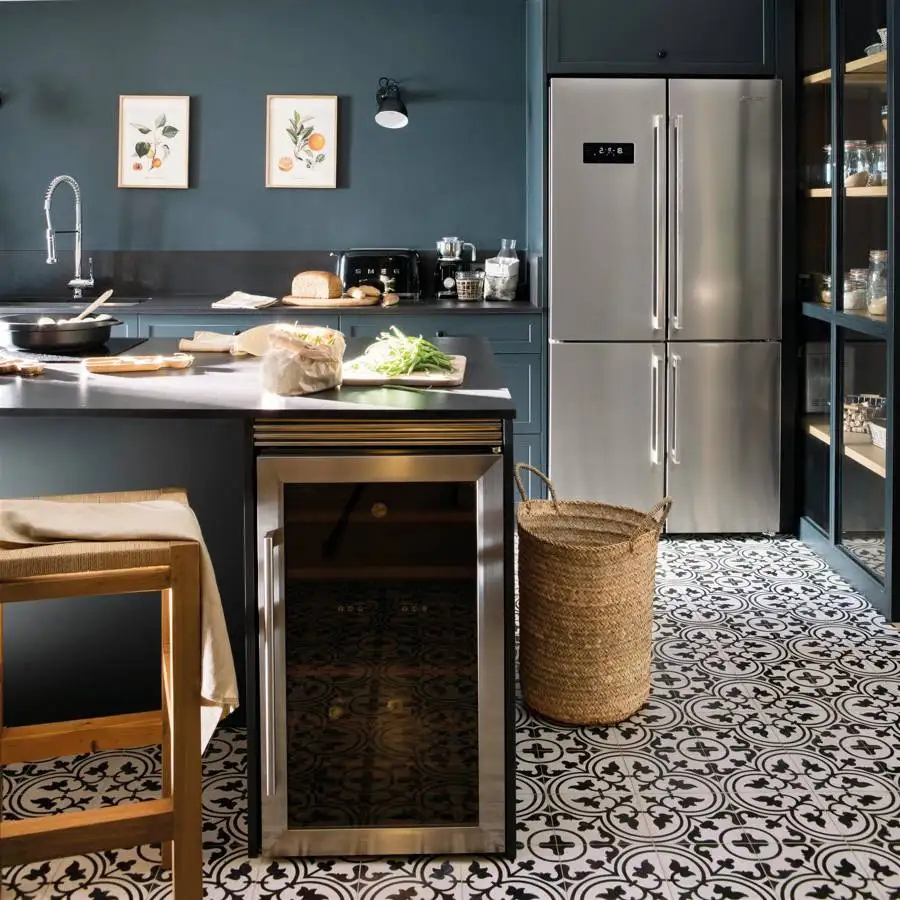
4. Technical and installation advice
For professional results:
✔️ Pattern and layout planning: dry-lay the tiles before fixing them to see how the pattern comes together.
✔️ Choice of a suitable finish: sealing is key to stain and wear resistance.
✔️ Use of gasket colours to complement the design, not that they become unwanted protagonists.
✔️ Coordination with other materials (wood, metal or terrazzo) for consistency of texture and colour.
5. Three combinations for 2026
Three cement tile combinations for kitchens, as a starting point for your project:
A. Contemporary city kitchen
- Flooring in subtle pattern of 20×20 cm pieces with neutral tones.
- A cement tile splashback with a dark blue accent under the extractor hood.
- Matt black metal elements and natural wood for balance.
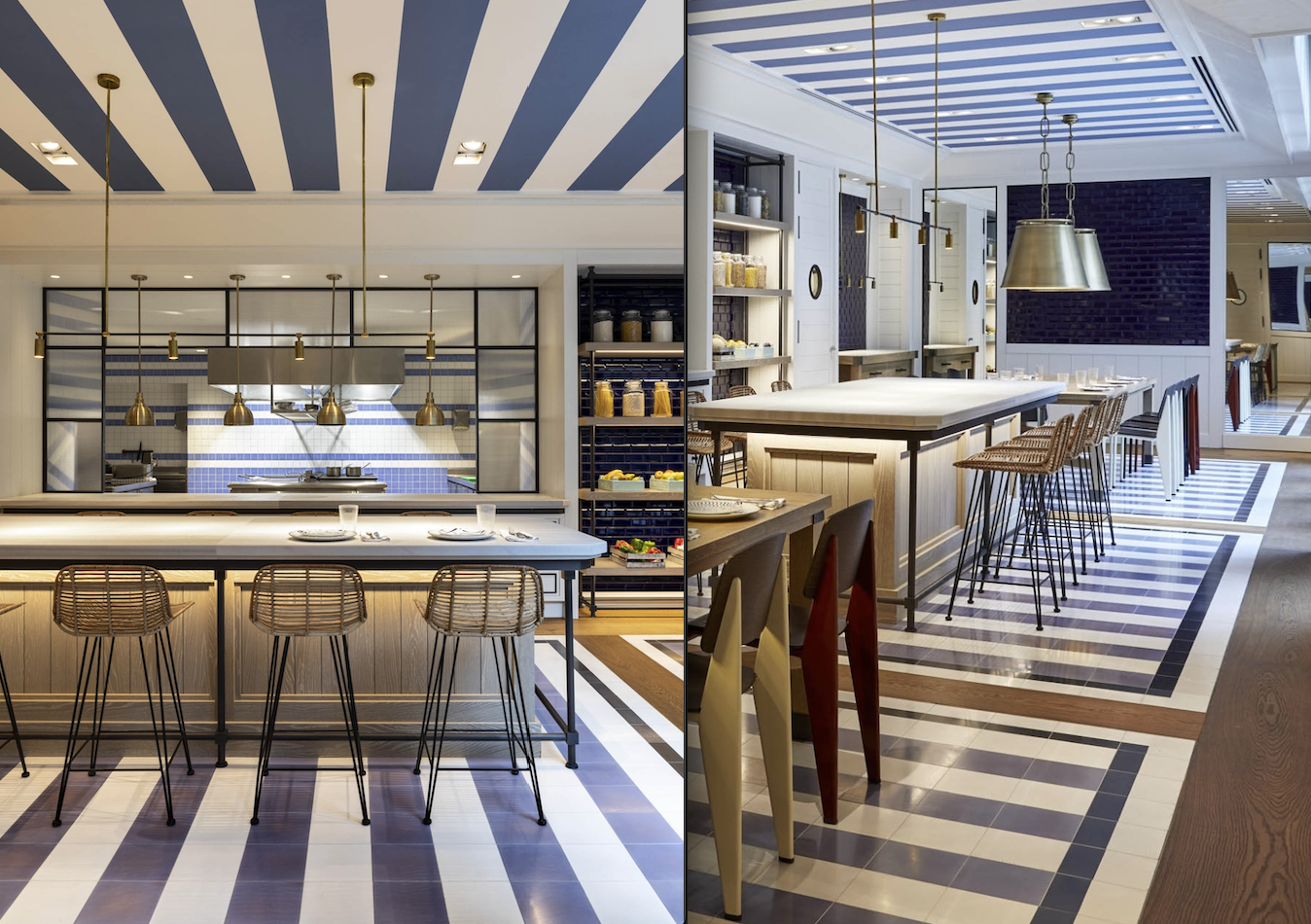
B. Mediterranean kitchen
- Cement tile insert in the bar area.
- A plain-colour floor in neutral tones, factory-sealed.
- Earth tones that evoke tradition and warmth.
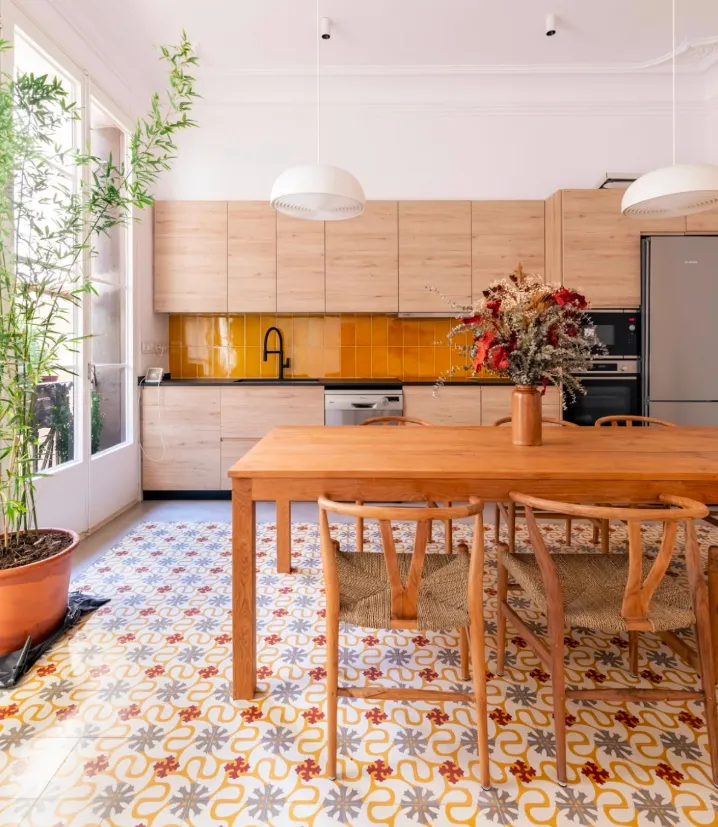
C. Wood and cement kitchen
- A cement tile pattern broken up by plain-colour tiles, so the whole does not feel heavy.
- A cement tile border on the wall behind the sink.
Conclusion: A material with past, present and future
Cement tiles are coming back to the kitchen for what they have always had: pattern, colour and strength. Well sealed, they stand up to daily use for decades.